
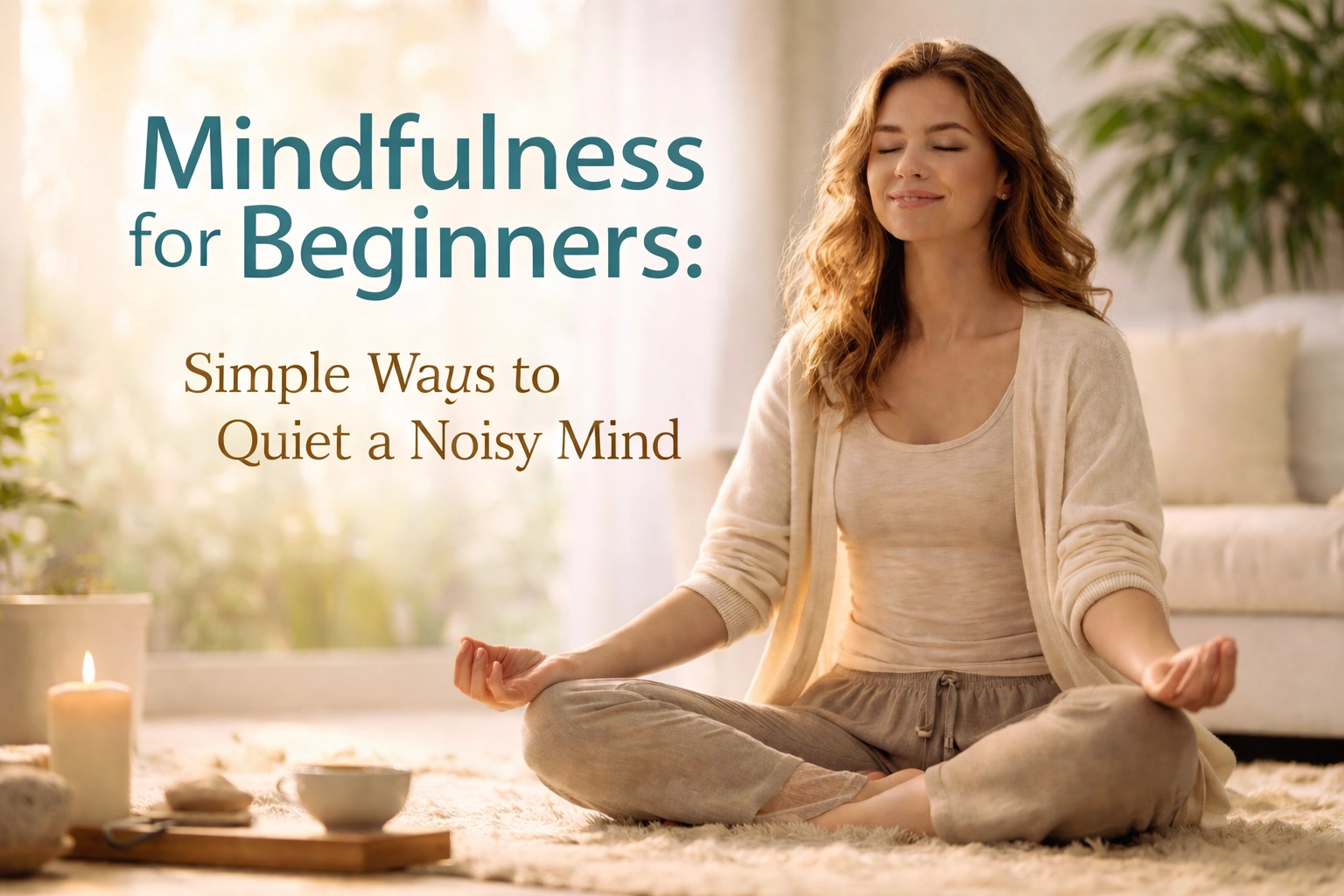
Let's be honest, your brain can be a pretty loud place to live sometimes. Between the endless to-do lists, replaying that awkward conversation from three days ago, and worrying about things that haven't even happened yet, finding a moment of peace can feel almost impossible.
If you've ever thought, "I'd love to try mindfulness, but I just can't turn my brain off," you're in good company. Here's the thing though: mindfulness isn't about turning off your thoughts at all. It's about changing your relationship with them.
Whether you're feeling stressed, anxious, overwhelmed, or just curious about what all the mindfulness buzz is about, this guide is for you. We're going to walk through some simple, beginner-friendly ways to quiet that noisy mind, no meditation cushion or incense required.
What Mindfulness Actually Is (And What It Isn't)
Before we dive into the how, let's clear up what mindfulness really means. At its core, mindfulness is simply the practice of cultivating awareness of your thoughts and feelings while remaining focused on the present moment.
That's it. No magic. No mysticism. Just being here, right now, paying attention on purpose.
What mindfulness is NOT:
- Emptying your mind completely
- Achieving a state of perfect calm
- A quick fix for all your problems
- Something you can fail at
- Reserved only for yogis or spiritual gurus
The goal isn't to stop thinking, that's pretty much impossible for us humans. Instead, mindfulness helps you notice when your mind has wandered off to worry-land and gently guide it back to the present. Think of it like training a puppy. The puppy will wander (a lot), and your job is to patiently bring it back, over and over again, without getting frustrated.

Three Simple Mindfulness Exercises for Beginners
Ready to give this a try? Here are three foundational practices that are perfect for beginners. No experience necessary, just a willingness to experiment.
1. Mindful Breathing
This is the easiest place to start, and you can do it anywhere, at your desk, in your car (parked, please!), or lying in bed before sleep.
How to do it:
- Find a comfortable position. You can sit in a chair with your feet flat on the floor, or lie down if that feels better.
- Let your eyes close gently, or soften your gaze toward the floor.
- Simply focus on your breath moving in and out of your body.
- As you breathe, you might silently say "breathe in" as you inhale and "breathe out" as you exhale. This gives your mind an anchor.
- When your mind wanders (and it will!), just notice where it went without judging yourself, and gently return to your breath.
Even one minute of focused breathing can help calm your nervous system. Start small, try it for just 60 seconds and see how it feels.
2. Body Scan Meditation
This practice is wonderful for shifting your attention away from racing thoughts and into your physical body. It's especially helpful if you tend to carry stress in your shoulders, jaw, or other areas.
How to do it:
- Lie on your back with your legs extended and arms relaxed at your sides.
- Close your eyes and take a few deep breaths to settle in.
- Starting at the top of your head, slowly move your attention through each part of your body, your forehead, eyes, jaw, neck, shoulders, arms, hands, chest, belly, hips, legs, and feet.
- At each area, simply notice any sensations you feel. Tightness? Warmth? Tingling? Nothing at all? There's no right answer.
- If you notice tension, imagine your breath flowing to that area, softening it with each exhale.
- Continue until you've scanned your entire body.
This practice typically takes 10-20 minutes, but you can do a shorter version focusing on just a few body parts when time is limited.

3. Walking Meditation
If sitting still feels impossible right now, walking meditation might be your new best friend. It's a great option for those who feel restless or find traditional meditation frustrating.
How to do it:
- Find a quiet space where you can walk about 10-20 feet back and forth (a hallway, backyard, or even a quiet room works great).
- Stand still for a moment, feeling the weight of your body on your feet.
- Begin walking slowly, much slower than your normal pace.
- Focus on the physical sensations of walking: the feeling of your foot lifting, moving through the air, and placing back down. Notice the shift of weight from one leg to the other.
- When you reach the end of your path, pause, turn around mindfully, and continue.
The key here is curiosity. What does walking actually feel like when you really pay attention?
When Your Mind Won't Stop Wandering
Here's something important: a wandering mind doesn't mean you're doing mindfulness wrong. It's actually the whole point.
Every time you notice your mind has drifted off to tomorrow's meeting or that embarrassing thing you said in 2015, and you bring your attention back, that's the practice. That moment of noticing? That's mindfulness in action. The returning is the work, not achieving some perfectly clear mind.
So please, be gentle with yourself. Your brain has been running wild for years; it's not going to suddenly sit quietly just because you asked nicely.
For those moments when worry feels especially sticky, try this grounding technique:
Ask yourself: "What's here, right now?"
Then shift your awareness to your physical surroundings:
- What do your feet feel like on the ground?
- What's the temperature of the air on your skin?
- What sounds can you hear around you?
- What can you see in your immediate environment?
This simple practice pulls you out of "what if" thinking and back into the present moment, where you're actually safe and okay.

How Long Should You Practice?
This is one of the most common questions beginners ask, and the good news is: there's no magic number.
Most experts recommend aiming for 10 or more minutes of daily practice, but here's what matters more than duration: consistency.
| Experience Level | Recommended Duration | Tips |
|---|---|---|
| Total beginner | 5 minutes daily | Split into two 2-3 minute sessions if needed |
| Getting comfortable | 10 minutes daily | Try practicing at the same time each day |
| Building a habit | 15-20 minutes daily | Experiment with different techniques |
Starting with just 5 minutes is completely valid. Five minutes of mindfulness that you actually do is infinitely more valuable than 30 minutes you keep putting off until "the right time."
Tips for Making Mindfulness Stick
Building any new habit takes time and patience. Here are some practical tips to help mindfulness become part of your daily life:
- Anchor it to an existing habit. Practice right after your morning coffee, during your lunch break, or before bed.
- Start ridiculously small. One minute counts. Really.
- Let go of perfection. There's no such thing as a "good" or "bad" meditation session.
- Use guided meditations. Apps and YouTube videos can be incredibly helpful when you're starting out.
- Be patient with yourself. This is a practice, not a performance.
You Deserve a Quieter Mind
Living with a noisy, restless mind is exhausting. You deserve moments of peace and presence in your day: and mindfulness can help you find them.
Remember, this isn't about becoming a different person or achieving some zen-like state of permanent calm. It's simply about learning to be present with yourself, exactly as you are, one breath at a time.
If you're finding that anxiety, stress, or overwhelming thoughts are significantly impacting your daily life, mindfulness is a wonderful tool: but it doesn't have to be the only one. Sometimes, talking with a professional can help you develop additional strategies tailored to your unique situation.
At The Counseling Place, we're here to support you on your journey toward a calmer, more centered life. Whatever that looks like for you, we'd be honored to walk alongside you.
Take the first step today( even if it's just one mindful breath.)